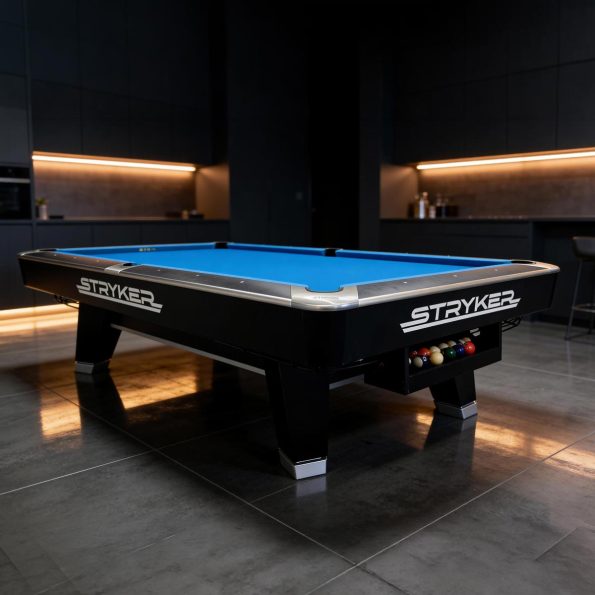
You get a new table, and a few weeks later there are pale spots on the cloth, usually behind the head string where you break, or wherever people play their screw-back shots. They look like burns because that is exactly what they are. Here is what causes them, why every pool table gets them, and how to keep them to a minimum.
What a burn mark is
A burn mark is a small pale or white spot where the top fibres of the cloth have been heated by friction. When the cue hits the ball, the ball does not roll straight away. For a split second it skids across the cloth, and if it is spinning, the bottom of the ball rubs against the cloth while the rest of the ball moves the other way. That rubbing creates heat in a tiny spot, enough to scorch the surface fibres and lift the dye out of them.
The marks are cosmetic. They change how the cloth looks, not how the table plays.
Every pool table gets them
Burn marks are not a sign of cheap or faulty cloth. They happen on every pool table, from a home table to a tournament table, with competition cloth or standard cloth. Pool tables use a fast, smooth worsted cloth with no fuzzy nap on top, and that is what gives you a quick, true roll. The trade-off is that there is nothing on the surface to protect the weave from heat. Better cloth with more wool in it shows marks less, but no cloth is immune.
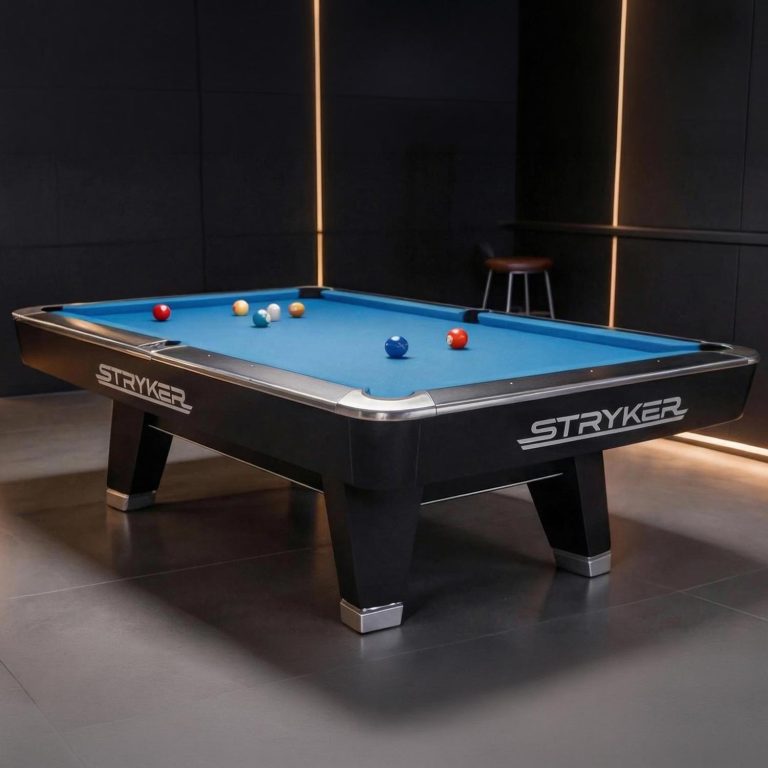
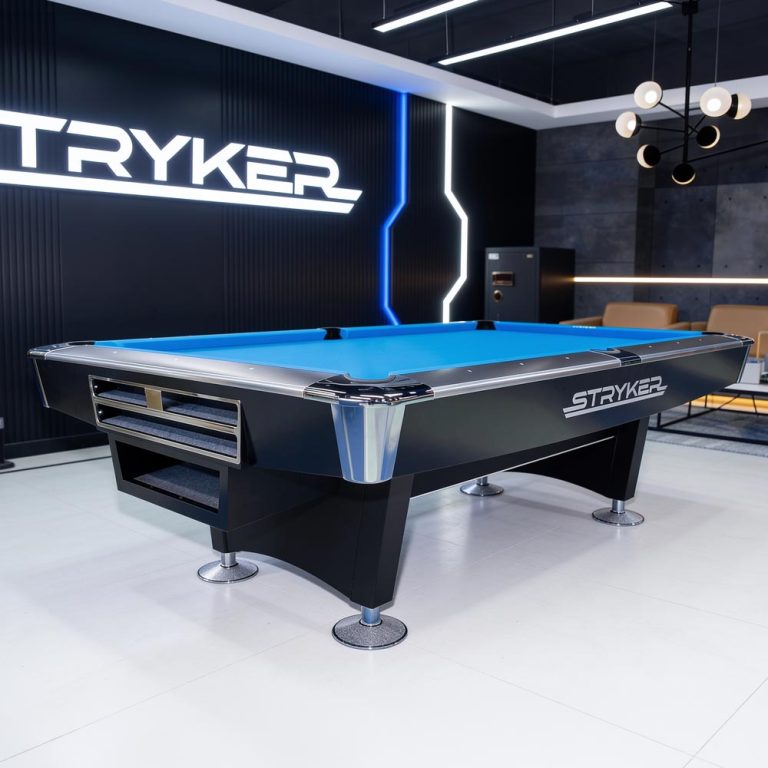
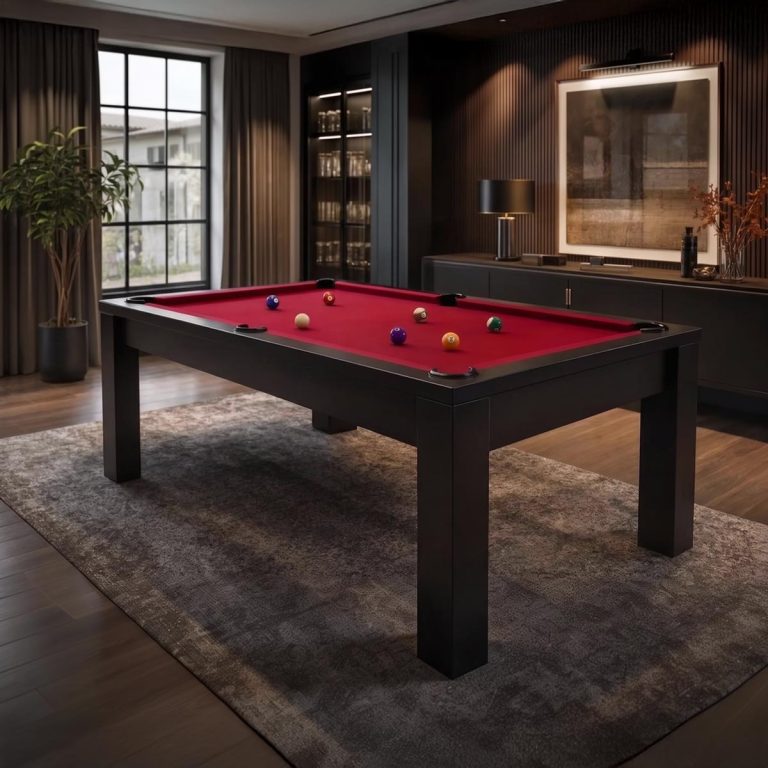
Our Boston and Vegas slate tables use PNS-900, a worsted wool and nylon speed cloth, and the Milano uses CPBA competition cloth. Both will show burn marks if the table is played hard. That is normal wear, not a fault in the cloth.
What causes the worst burns
Burns are made by friction, and friction comes from the ball skidding and spinning on the spot. The shots that do the most damage are:
- Smashed screw-back (draw) shots. This is the big one. Someone hits the cue ball very low and very hard to make it come back. The ball shoots forward while spinning backwards fast, so the bottom of the ball grinds into the cloth. Do that over and over from the same spot and you get a burn.
- Hitting down on the ball. Raising the back of the cue and stabbing down drives the ball into the cloth instead of across it. It burns the cloth, and a miscue can dig the tip in and tear it.
- Breaking as hard as you can. A big break from the same spot every time leaves a burn on that spot.
- Jump shots and massé (swerve) shots. Both drive the ball down into the cloth at an angle. They are also the most common cause of tears.
- Dirty or cheap balls. Chalk and grime on the balls, or soft polyester balls, add friction and leave marks of their own.
How to prevent burn marks
- Use a smooth, level stroke. Keep the cue as level as you can and follow through. You do not need to hit hard to get backspin: a smooth stroke just below centre brings the ball back with far less skidding than a hard jab.
- Don’t stab down. If you have to raise the cue to get over a ball, play a softer, safer shot instead.
- Break firmly, not flat out. A controlled break spreads the balls just as well. Move the cue ball to a slightly different place for each break so the wear is spread out.
- Save the trick shots for the pub. Jump and massé shots are hard on any cloth.
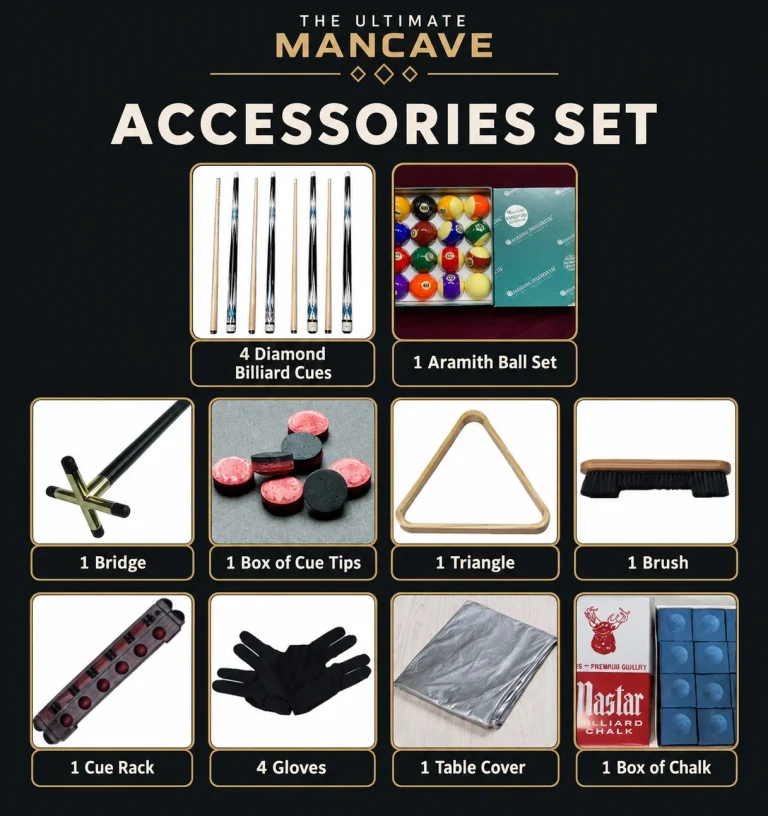
- Use good balls and keep them clean. Hard phenolic balls, like Aramith, are much more resistant to heat than cheap polyester balls and make fewer marks. Wipe the balls with a damp cloth and dry them. The Ultimate Pool Upgrade Kit, offered at checkout with our slate tables, includes an Aramith ball set.
- Keep the cloth clean and tight. Brush it after you play (see how to clean a pool table cloth). A cloth that has gone loose bunches up in front of the ball and burns more easily, so have it re-stretched if it ever goes slack.
Can burn marks be removed?
Light burns can sometimes be brushed out. Give the mark a firm brush with a proper pool table brush, in straight strokes along the cloth, and a fresh, shallow burn will often fade or disappear. Deeper burns can’t be fully removed: the fibres have been scorched, so the colour does not come back. Don’t scrub them or use cleaning products, as that damages the cloth more than the burn. The good news is they do not affect the roll of the ball, and when the cloth eventually wears out, a slate table can be re-clothed and look new again.
The short version
Burn marks come from how the table is played, not from the cloth. Play smooth instead of hard, keep the cue level, skip the trick shots, and use clean, good-quality balls, and your cloth will stay looking good for years.